



The buildings
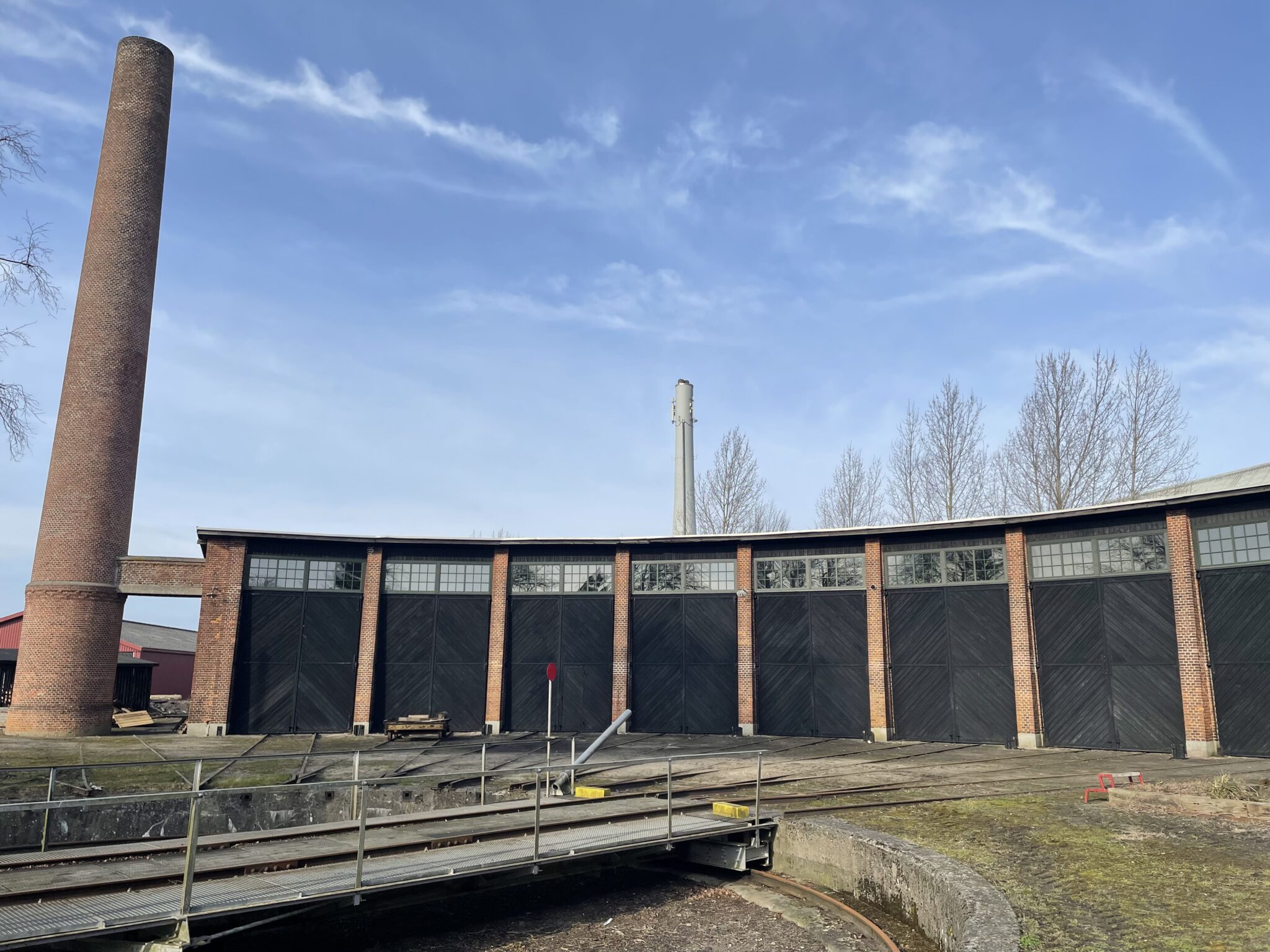
The depot in Maribo
The roundhouse had space for 8 steam locomotives with access from a turntable and for a diesel railcar distributed over 9 tracks – the space for the diesel railcar was intended for the Maribo-Torrig Railway (MTJ), which opened for operation in 1924. There were also lounges for locomotive drivers, locomotive firemen and polishers, bathrooms and boiler rooms. In connection with the Torrigremisen there was a small workshop.
Each track has an inspection pit between the rails for inspection and lubrication of the locomotives. Above the steam locomotives' berths there are skylights and a small smoke hood in the roof, in addition to a common smoke exhaust to the high depot chimney. Originally, there was a dual water supply to the locomotive berths, partly sea water from the railway's water tower, and partly water from the waterworks.
The entire complex was built as a single building in the typical red brick barn style with a corrugated iron roof. The built-up area is approximately 1,400m².
This entire facility has been largely preserved intact – even the modest woodshed at the end of the shed is still there and in use.
West of the depot was the coal yard – the railway's fuel storage for the steam locomotives. It is now closed, but some of the equipment, such as coal buckets and a tilting crane for lifting the coal buckets onto the coal bench, has been preserved.
The use
The depot housed the locomotives used in the trains to Bandholm, Rødbyhavn and Torrig, and the shunting machines used at Maribo station. There were also reserve machines for use in the event of breakdowns or extra traffic. The latter were used, for example, in the autumn, when coal and lime had to be transported to the sugar factories and grain and sugar to the ports and the State Railways.
At the depot, depot workers, cleaners and night stokers, ensured that the steam locomotives were supplied with coal and water and that they were fired up when the locomotive crew arrived to take over. They also cleaned the locomotives' boilers of ash and slag. The locomotive crew met in the depot, where they had lockers in their respective lounges. Most had their regular shifts, while the “reserve” was ready to be called out quickly if the phone rang from the station.
In 1941, the Torrig Line was closed down, and the line's last diesel railcar was sold, but other diesel locomotives had moved into the depot in the 1920s and 1930s to replace the expensive steam locomotives.
By the mid-1950s, A/S Lollandsbanen (as the railway company was now called) had been so modernized that it no longer operated steam trains, and the depot was no longer staffed.
The Heritage railway
When the Danish Railway Club was founded in 1961, the club was looking for a place to run vintage trains. With great goodwill from the then director of A/S Lollandsbanen, the club was granted permission to run vintage trains on the Bandholm Line from 1962, and the club was allocated space for its one locomotive in the depot.
Since then, the Maribo-Bandholm Museum Railway has developed with many more locomotives and carriages. The depot became the permanent base where the operating equipment is stationed, where repairs are carried out, and where the volunteer staff meets and socializes. It was therefore a natural development that the Museum Railway obtained a lease covering the entire round depot in the 1980s.
Together with the depot, the club has taken over important railway traditions. When the train returns to the depot after a day of driving and the carriages are marshalled into place, names are used for the tracks outside the depot, such as “Torrig track”, “kulgårds track”, “bakken” and “retsporet”. A steam locomotive is then cleaned of ash in the same place, which has been used since the 1920s. Finally, it is supplied with coal and water, so that it is ready for the next trip.
It's a living railway environment!
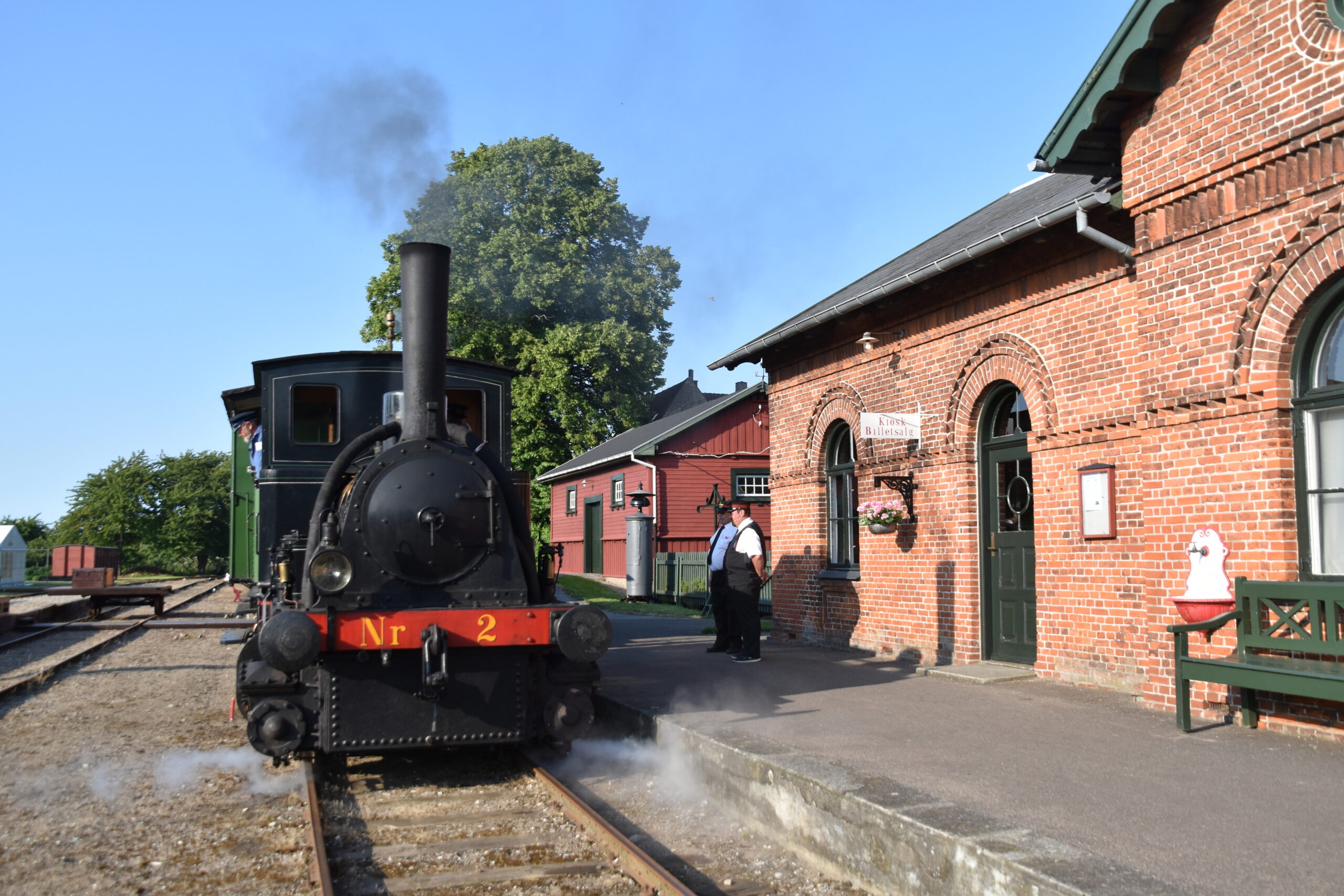
History of Bandholm station
At the end of the First World War, railway traffic on Lolland increased explosively, and many much-needed expansions of the facilities were initiated.
The workshop in Maribo had been expanded several times since the opening of the line, and in 1918 the Lolland-Falsterske Jernbane-Selskab began construction of a completely new round depot in Maribo. It was completed in 1926.